The principal
Jan “Puncar” Brezina
Puncar co-authored the book and leads the practice. He also builds Corgtex, the toolchain used in contained pilot work.
Meet the principal →Autonomous organization consulting
We help executive teams redesign decision rights, oversight, and organizational context so AI agents can do useful work without making accountability harder.
Take the readiness diagnostic →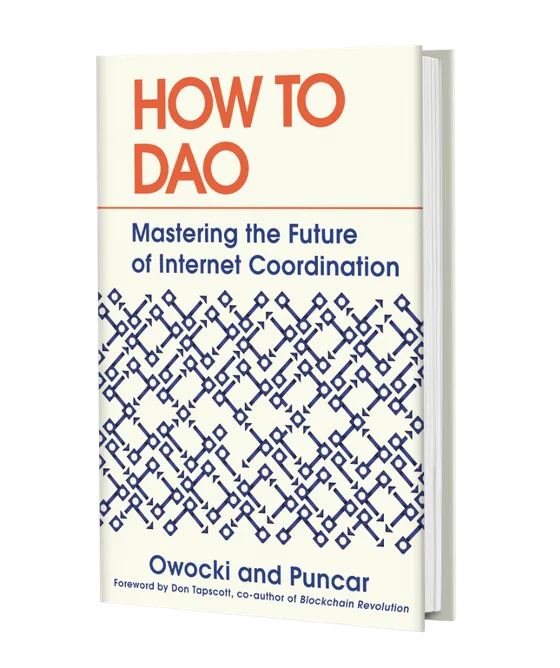
The coordination problem continues
How to DAO examined how internet-native organizations distribute authority, share context, govern decisions, and make work transparent. As AI agents enter real workflows, those questions move into every organization. How to DAO applies that published foundation to decision rights, organizational memory, human oversight, and accountable execution.
The engagement path
Start with a bounded organizational question, turn it into a design leadership can evaluate, and test one workflow only when the conditions are right.
01 · Diagnostic
Map workflows, context flows, decision rights, agent-ready opportunities, and governance risks.
Explore the diagnostic →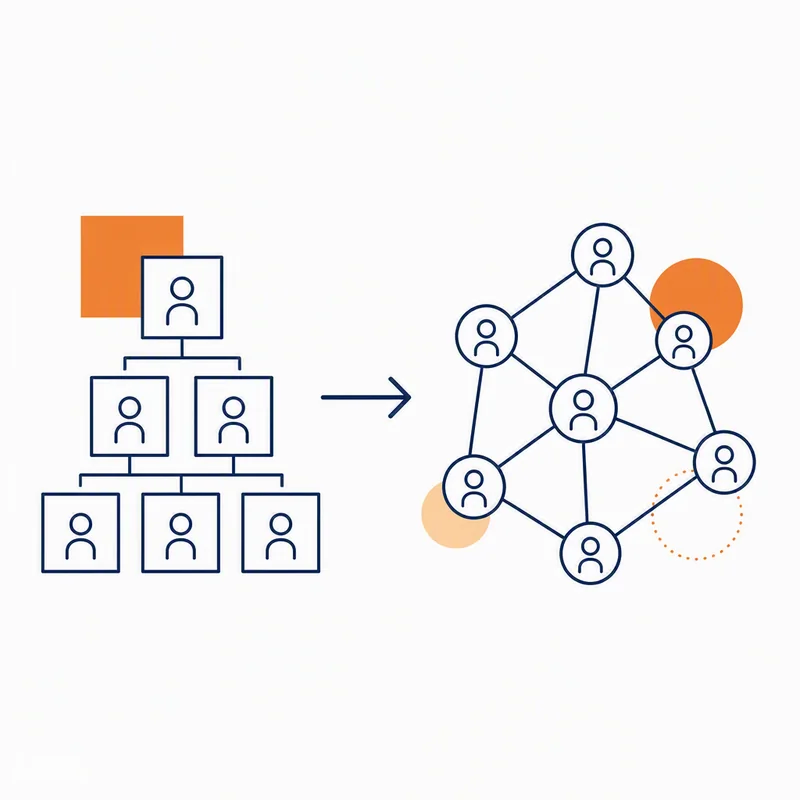
02 · Design
Set ownership, agent boundaries, human review, escalation paths, and rollout sequence.
Explore operating-model design →
03 · Follow-on
Use agreed success criteria to decide whether one bounded workflow should stop, change, or expand.
Explore contained pilots →Self-serve starting point
Answer twelve questions about decision rights, organizational context, oversight, and workflow readiness. Your answers and score stay in this browser unless you choose to send the result with an inquiry.
Take the readiness diagnosticWhy this practice
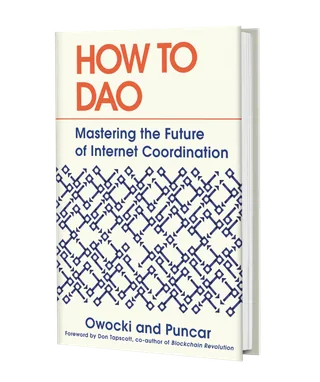 The book · independently published proof
Co-authored by Puncar and Kevin Owocki, with a foreword by Don Tapscott. The book on how internet-native organizations coordinate, govern, and distribute authority — and the externally verifiable foundation behind this practice.
Explore the book →The principal
Puncar co-authored the book and leads the practice. He also builds Corgtex, the toolchain used in contained pilot work.
Meet the principal →The research
Our research note examines published operating-model changes and the governance questions they create.
Read the research →Proof posture: no client names or case studies are currently published here. Public company examples are illustrations, not client claims or endorsements.
The shift in public
Block and Coinbase are public illustrations. They are not How to DAO clients, case studies, or endorsements.
Block
Dorsey and Botha argue that hierarchy solved an information-flow constraint. Their alternative uses a company world model, an intelligence layer, DRIs, and player-coaches. Agents handle more coordination while people remain responsible for the work.
Read Block's thesis →Coinbase
Armstrong's memo describes fewer layers, no managers who only manage, AI-native pods, and individuals running fleets of agents. Coinbase engineering also documents the infrastructure, observability, and auditability required.
Read Armstrong's memo →Latest article
A short opinion piece on one-person companies, AI agents, and why human connection still matters in AI-native organizations.
Read the article →Bring the workflow, decision, or accountability question that becomes harder as agents take on more work.
FAQ
We help executive teams design AI-native operating models — the governance, decision rights, and coordination structures that make agents productive rather than just present.
Corgtex is the platform we built and use to do the work — mapping organizations, testing agent workflows, and running pilots. You hire us, not software.
No. They are public companies documenting this shift in real time. We reference their work because it is the clearest proof that this reorganization is happening now.
With a working session about one operating problem. If there is a fit, the first formal step is usually a scoped diagnostic with an agreed fee and decision-ready outputs.
Work is led by Jan “Puncar” Brezina. Any additional contributors and their roles are agreed before they join an engagement.
A pilot is never the first step by default. The diagnostic and operating-model work can stand on their own and may show that a pilot should wait.